
Tahari Bed-in-a-Bag Won't Fit Deep Mattress? Here's the Real Fix
You unpack a gorgeous Tahari bed-in-a-bag set, spread the comforter, arrange the shams — and then the fitted sheet refuses to stretch over the corners of your 14-inch mattress. The elastic pops off one side the moment you tuck the other.
This isn't a sizing mistake on your part. Most bed-in-a-bag collections default to standard 12-to-15-inch pocket depth, and manufacturers rarely print that spec on the outside of the box. If your mattress is 16 inches or deeper, the included fitted sheet simply wasn't built for it. We'll walk you through exactly what to measure, which workarounds actually hold, and when it makes sense to swap out just the fitted sheet while keeping the rest of your set intact.

Why the Fitted Sheet Pocket Depth Matters More Than the Label Size
A queen fitted sheet labeled “Queen” tells you length and width — 60 by 80 inches — but reveals nothing about how deep the elastic pocket runs. That third dimension, called pocket depth or drop, determines whether the sheet will hook under a thick mattress or snap loose overnight.
Most bed-in-a-bag fitted sheets are cut for a 12-to-15-inch drop, which covers traditional innerspring and many foam mattresses. Pillow-tops, hybrid models, and newer memory-foam designs routinely measure 16 to 18 inches tall, and a 15-inch pocket simply won’t reach.
Measure your mattress from the sleep surface straight down to the box spring or platform deck. Add one inch for elastic compression. If that total exceeds the pocket depth printed on the fitted-sheet tag — or if no depth is listed at all — you’re working with a mismatch, not a defective product.
Sheet-Only Replacement vs. Buying a Whole New Set
The comforter, shams, and decorative pillows in your Tahari set aren’t mattress-dependent. Only the fitted sheet needs to match your bed’s height, which means you can solve a bed in a bag deep mattress problem by swapping that single piece.
Look for a fitted sheet labeled “deep pocket” or “extra deep,” typically 16 to 22 inches. Buy the same fiber content — sateen, percale, microfiber — so the hand feel matches the flat sheet that came with your set. Thread count doesn’t need to be identical, but staying within 50 threads keeps the weight and drape similar.
Keeping the Rest of the Ensemble Coordinated
If your Tahari set uses a printed or textured pattern on the flat sheet, replacing only the fitted sheet with a solid color in the same tone preserves the look when the bed is made. No one sees the fitted sheet once the comforter and shams are arranged, so a near-match in shade is usually enough.
Temporary Fixes That Hold Until You Replace the Sheet
Sheet suspenders — elastic straps with clips that run diagonally under the mattress — can add 2 to 3 inches of effective reach to a too-short fitted sheet. Attach one clip to each corner of the sheet, pull the strap taut beneath the mattress, and fasten the opposite clip to the far corner.
This works for a week or two while you order the right replacement, but the constant tension eventually distorts the original sheet’s elastic and the clips can leave small indentations in softer foam mattresses.
Safety-Pin Corner Gathers
Folding excess fabric at each corner and pinning it with a large safety pin reduces the pocket circumference and pulls more material down the side. It’s a one-night emergency solution at best — the pins work loose during sleep, and repeated pinning weakens the fabric along the fold line.
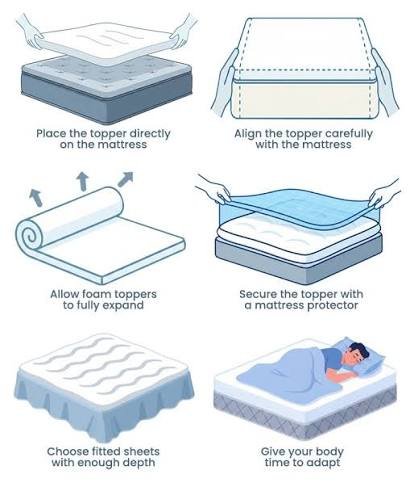
How Mattress Toppers and Pads Affect Pocket-Depth Fit
A quilted mattress pad or memory-foam topper adds 1 to 4 inches to your mattress height, pushing a borderline-fit sheet past its elastic limit. If your Tahari fitted sheet worked fine on the bare mattress but started popping off after you added a cooling pad, the pad — not the sheet — tipped the total thickness over the pocket threshold.
You have two options: remove the topper and accept the slightly firmer sleep surface, or size up to a deep-pocket fitted sheet that accommodates both the mattress and the pad together. Measure the combined height with the pad in place, then shop for a sheet with at least 2 inches of extra pocket depth beyond that number.
Some shoppers assume a thicker flat sheet or an oversized comforter compensates for a shallow fitted sheet. Neither does — only the fitted sheet’s pocket elastic holds the bottom layer in place, and no amount of top-layer weight will keep the corners from slipping.

When to Contact Tahari Customer Service About Fit Issues
If your mattress falls within the standard 12-to-15-inch range and the fitted sheet still won’t stay on, check the elastic itself. Run your hand around the entire hem — a manufacturing defect can leave one section with slack or missing elastic, even if the opposite corners grip fine.
Reach out to our customer-service team with your order number, a photo of the sheet tag showing size and style, and a quick description of where the elastic is failing. We’ll troubleshoot whether it’s a depth mismatch, a defect, or an installation issue like hooking the long side of the sheet onto the short side of the mattress.
Don’t trim the elastic or alter the hem yourself before contacting us — any modification voids the return or exchange option, and most fit problems have a simpler solution that keeps your full bed-in-a-bag set intact.
Measure First, Then Match the Right Pocket Depth to Your Mattress
A bed-in-a-bag set that doesn’t fit your mattress height isn’t a wasted purchase — you’re keeping 80 percent of the ensemble and swapping only the fitted sheet. Measure your mattress from top surface to base, add an inch, and shop for a deep-pocket replacement that meets or exceeds that number.
Sheet suspenders and corner pins will buy you a night or two, but a properly sized fitted sheet eliminates the midnight re-tucking and preserves the elastic for years of normal use. Match the replacement sheet’s fiber and weave to your Tahari flat sheet, and the bed will look and feel exactly as the designer intended — with corners that actually stay put.
Common Questions About Deep-Mattress Bed-in-a-Bag Fit
A king fitted sheet is 16 inches wider and 4 inches longer than a queen mattress, so even though the pocket might be deep enough, the excess fabric bunches under the sides and creates lumps that shift during sleep.
The sheet will also pull diagonally rather than square to the mattress corners, leaving gaps. Always match the sheet's labeled size to your mattress dimensions and solve depth separately with a deep-pocket version of the correct size.
Check the product description or packaging label for a line reading "fits mattresses up to X inches" or "pocket depth X inches." If that spec isn't listed, assume a standard 15-inch maximum.
Measure your mattress before you order, and if the set you want doesn't state its pocket depth, contact the retailer or manufacturer directly. We include pocket-depth specs on every fitted sheet in our collections, either in the online listing or on the sewn-in care tag.
Hot-water washing can shrink cotton or cotton-blend sheets by 3 to 5 percent in length and width, but it also tightens the elastic, which reduces pocket depth rather than increasing it.
If you're trying to make a too-large sheet fit a thinner mattress, hot wash and high-heat drying might help. For a too-short sheet on a deep mattress, heat will make the problem worse. Always follow the care label to preserve the fabric's intended fit.
You can hand-sew or machine-stitch additional elastic into the hem, but you'll need to open the entire casing, thread new elastic alongside the old, and re-close the seam without puckering the fabric.
Most home sewers find it faster and cleaner to buy a pre-made deep-pocket sheet. If you do add elastic, use 1/4-inch braided elastic rated for laundering, and leave a 1-inch overlap at the join point to prevent the ends from separating in the wash.
A split king uses two twin-XL fitted sheets rather than one king sheet, because each half of the mattress articulates independently. Standard bed-in-a-bag sets include a single king fitted sheet, which won't work.
You can keep the king flat sheet, comforter, and shams from the set and purchase two twin-XL deep-pocket fitted sheets separately. Make sure both replacement sheets match the pocket depth of your adjustable base plus mattress height.
"Deep pocket" typically means 15 to 18 inches, while "extra deep" or "ultra deep" usually covers 18 to 22 inches. There's no industry standard for these terms, so always check the actual measurement in inches rather than relying on the label alone.
If your mattress is exactly 16 inches, a sheet marked "fits up to 16 inches" will be borderline tight — go one size deeper to ensure the elastic has room to compress and hold without stress.